

Can solid wood boards be bent?
Jul 23, 2025
Leave a message
Can solid wood boards be bent? This is a question that often comes up in the woodworking industry, and as a solid wood board supplier, I'm here to shed some light on this topic.
The Basics of Solid Wood Boards
Solid wood boards are highly valued for their natural beauty, durability, and strength. They are cut directly from trees, retaining the unique grain patterns and characteristics of the wood species. Different types of wood, such as pine, acacia, paulownia, each have their own distinct properties. For example, pine is relatively soft and easy to work with, while acacia is known for its hardness and resistance to wear.
Pine Table Top Acacia Conical Wood Board [/solid-wood-board/pine-table-top-acacia-conical-wood-board.html] is a product that combines the features of pine and acacia. The pine provides a smooth surface and a light - colored base, while the acacia adds a touch of durability and a more prominent grain pattern. This type of board is often used for table tops, where both aesthetics and functionality are important.
The Science of Wood Bending
To understand whether solid wood boards can be bent, we need to look at the structure of wood. Wood is made up of cellulose fibers that are held together by lignin. When wood is subjected to heat and moisture, the lignin softens, allowing the cellulose fibers to move and re - arrange themselves. This is the basic principle behind wood bending.
However, the ability to bend solid wood boards depends on several factors. First, the species of wood plays a crucial role. Some woods, like white oak and ash, are more flexible and can be bent more easily than others. Paulownia is another wood species that has relatively good bending properties. Paulownia Batten Uv Drawer Side Bed Side Drawer Board [/solid-wood-board/paulownia-batten-uv-drawer-side-bed-side.html] is made from this type of wood. Paulownia is lightweight, yet strong, and its fibrous structure allows it to be bent to a certain degree without breaking.
The thickness of the board is also a significant factor. Thinner boards are generally easier to bend than thicker ones. As the thickness increases, the internal stresses within the wood become more difficult to overcome during the bending process. A general rule of thumb is that for most solid wood species, boards less than 1 inch thick have a better chance of successful bending.
Traditional and Modern Bending Methods
There are several methods for bending solid wood boards. One of the traditional methods is steam bending. In this process, the wood is placed in a steam chamber for a period of time. The steam penetrates the wood, softening the lignin and making the wood more pliable. After steaming, the wood is quickly transferred to a bending form and held in place until it cools and the lignin hardens again.
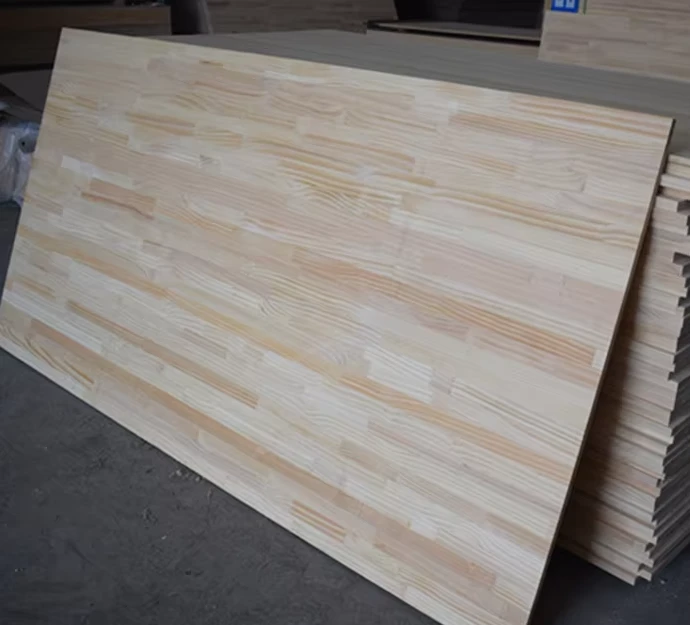
Another method is the use of bending laminates. This involves gluing together several thin layers of wood, each with its grain running in a different direction. The laminates are then bent to the desired shape. This method is often used when a more complex or extreme bend is required. Paulownia Finger Joint Wood Panel [/solid-wood-board/paulownia-finger-joint-wood-panel.html] can be used in this process. The finger - jointed structure provides additional strength and stability, making it suitable for bending applications.

Limitations and Challenges
Despite the possibility of bending solid wood boards, there are limitations and challenges. One of the main challenges is the risk of cracking or splitting. If the wood is bent too quickly or too forcefully, the cellulose fibers can break, resulting in visible cracks. This is especially true for woods with a coarse or irregular grain pattern.
Another limitation is the availability of equipment and expertise. Steam bending requires specialized steam chambers and bending forms, which can be expensive to purchase and maintain. Additionally, the process requires a certain level of skill and experience to ensure that the wood is bent correctly without causing damage.
Applications of Bent Solid Wood Boards
Bent solid wood boards have a wide range of applications. In the furniture industry, they are used to create unique and ergonomic designs. For example, bent wood chairs are a classic example of how solid wood can be shaped to provide both comfort and style. In the construction industry, bent wood can be used for arches, curved beams, and other architectural features.
Quality Control and Assurance
As a solid wood board supplier, we take quality control very seriously. Before any bending process, we carefully select the wood based on its species, moisture content, and grain pattern. We also conduct pre - bending tests to ensure that the wood is suitable for the intended bending application.
During the bending process, we closely monitor the temperature, moisture level, and bending speed to minimize the risk of damage. After bending, we perform post - bending inspections to check for any signs of cracking or other defects.
Conclusion
In conclusion, solid wood boards can be bent, but it is a complex process that depends on various factors such as wood species, thickness, and bending method. While there are challenges and limitations, the ability to bend solid wood opens up a world of possibilities for creative and functional designs.
If you are interested in purchasing solid wood boards for bending applications or have any questions about our products, we encourage you to contact us for a procurement discussion. We are committed to providing high - quality solid wood boards and professional advice to meet your specific needs.
References
- "Wood Technology: From Log to finished Product" by Bruce Hoadley
- "The Woodworker's Companion: Tools, Techniques, and Projects" by Chris Schwarz