

How thick is the standard Pine Solid Wood Board?
Jun 26, 2025
Leave a message
As a seasoned supplier of Pine Solid Wood Boards, I've encountered numerous inquiries regarding the standard thickness of these boards. This topic is crucial as it directly impacts the suitability of the boards for various applications. In this blog, I'll delve into the details of the standard thicknesses of Pine Solid Wood Boards, their applications, and other related aspects.
Common Standard Thicknesses
Pine Solid Wood Boards come in a range of standard thicknesses, which are determined by industry norms and the requirements of different end - uses. The most common thicknesses include 12mm, 15mm, 18mm, 20mm, 25mm, and 30mm.
The 12mm thick Pine Solid Wood Board is relatively thin. It is often used for interior decorative purposes such as wall paneling, some types of furniture backs, or as a substrate for veneers. Its light weight and relatively lower cost make it an attractive option for these non - load - bearing applications. For example, in a modern minimalist interior design, 12mm Pine Solid Wood Boards can be used to create a warm and natural - looking accent wall.
A 15mm thick board is a bit more substantial. It can be used for cabinet doors, drawer fronts, and some small - scale furniture pieces. It provides better durability compared to the 12mm board and can withstand a bit more wear and tear. Many DIY enthusiasts prefer 15mm Pine Solid Wood Boards for building their own small storage units or display shelves.
The 18mm thickness is one of the most popular choices in the market. It strikes a good balance between strength and cost. This thickness is commonly used in the construction of kitchen cabinets, wardrobes, and bookshelves. It can support a reasonable amount of weight and is suitable for both residential and commercial furniture applications. For instance, in a commercial office space, 18mm Pine Solid Wood Boards can be used to build sturdy filing cabinets.
The 20mm thick Pine Solid Wood Board offers enhanced strength. It is often used for furniture that needs to bear heavier loads, such as dining tables, coffee tables, and large - scale desks. The extra thickness provides stability and durability, ensuring that the furniture can last for a long time.
Boards with a thickness of 25mm and 30mm are even more robust. They are typically used in high - end furniture manufacturing, outdoor furniture, and in some cases, for structural elements in construction. For example, a 25mm or 30mm thick Pine Solid Wood Board can be used to build a solid outdoor bench that can withstand the elements and the weight of multiple people.
Factors Influencing Thickness Selection
Several factors influence the choice of the appropriate thickness of Pine Solid Wood Boards.
The first factor is the intended use of the board. As mentioned above, non - load - bearing decorative applications can use thinner boards, while load - bearing furniture and structural elements require thicker ones. For example, if you are building a simple picture frame, a 12mm board would be sufficient. But if you are constructing a large - scale bookshelf to hold a collection of heavy books, a 20mm or thicker board would be more appropriate.
Cost is another important factor. Thicker boards generally cost more due to the increased amount of raw material and processing involved. Customers need to balance their budget with the requirements of their project. Sometimes, a slightly thinner board can be reinforced or used in combination with other materials to achieve the desired strength at a lower cost.
The size of the project also matters. For small - scale projects, a thinner board might be more manageable in terms of cutting, handling, and installation. However, for large - scale projects where a lot of boards are used, the overall strength and durability provided by a thicker board might be more cost - effective in the long run.
Different Types of Pine Solid Wood Boards and Their Thicknesses
In addition to the standard thicknesses, different types of Pine Solid Wood Boards also have their own characteristics and common thicknesses.
Carbonized Pine Board is a type of board that has undergone a carbonization process. This process enhances the board's durability, resistance to decay, and gives it a unique color. Carbonized Pine Boards are available in various thicknesses, with 15mm - 25mm being quite common. The carbonization process makes the board a bit more rigid, and these thicknesses are suitable for both indoor and outdoor applications, such as decking, exterior wall cladding, and high - end furniture.
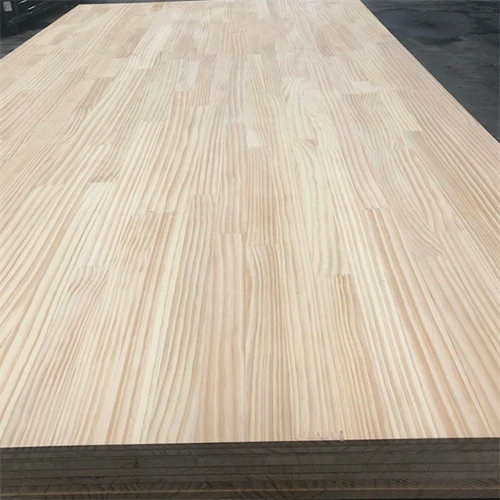
Finger Jointed Pine Boards are made by joining smaller pieces of pine wood together using a finger - jointing technique. This type of board can be produced in a wide range of thicknesses. Thinner finger - jointed boards (12mm - 18mm) are often used for interior trim work, while thicker ones (20mm - 30mm) can be used for structural and load - bearing applications. The advantage of finger - jointed boards is that they can make use of smaller pieces of wood, which is more sustainable and can sometimes offer a more consistent quality compared to single - piece boards.
Solid Wood Edge Glued Board is created by gluing together the edges of multiple pine wood strips. It is available in various thicknesses similar to other types of pine boards. This type of board is known for its stability and can be used in a variety of applications, from furniture making to flooring. The thickness selection for solid wood edge - glued boards also depends on the specific application, just like other pine boards.
Quality and Thickness
The quality of a Pine Solid Wood Board is not solely determined by its thickness. However, a proper thickness is an important aspect of ensuring quality. A board that is too thin for its intended use may warp, crack, or break easily, which indicates poor quality in terms of performance. On the other hand, using an overly thick board for a non - load - bearing application is not only wasteful but may also add unnecessary weight and cost.
When selecting a Pine Solid Wood Board, it's important to consider other quality factors as well, such as the moisture content, the grade of the wood, and the presence of knots or other defects. A high - quality board should have a consistent moisture content to prevent warping and shrinking. The grade of the wood can affect its appearance and strength, with higher - grade woods generally having fewer defects.
Conclusion
In conclusion, the standard thickness of Pine Solid Wood Boards varies depending on the application, cost, and other factors. The most common thicknesses range from 12mm to 30mm, each with its own set of advantages and suitable uses. Whether you are a professional furniture maker, a DIY enthusiast, or a contractor, understanding the appropriate thickness for your project is crucial for achieving the best results.
If you are in the market for Pine Solid Wood Boards, we are here to assist you. Our company offers a wide range of high - quality Pine Solid Wood Boards in various thicknesses and types. We can provide you with the right advice on which board is most suitable for your specific needs. Contact us for more information and to start your procurement process. We look forward to working with you to bring your projects to life.
References
- "Wood Handbook: Wood as an Engineering Material" by the U.S. Department of Agriculture Forest Service.
- "The Complete Guide to Woodworking" by various authors in the woodworking industry.
- Industry standards and guidelines for Pine Solid Wood Boards from relevant wood product associations.