

How to stack red wine wooden boxes safely?
Sep 02, 2026
Leave a message
As a supplier of Red Wine Wooden Boxes, I understand the importance of safely stacking these boxes, not only to protect the precious contents inside but also to ensure the efficiency of storage and transportation. In this blog, I'll share some professional insights on how to stack red wine wooden boxes safely.
Understanding the Characteristics of Red Wine Wooden Boxes
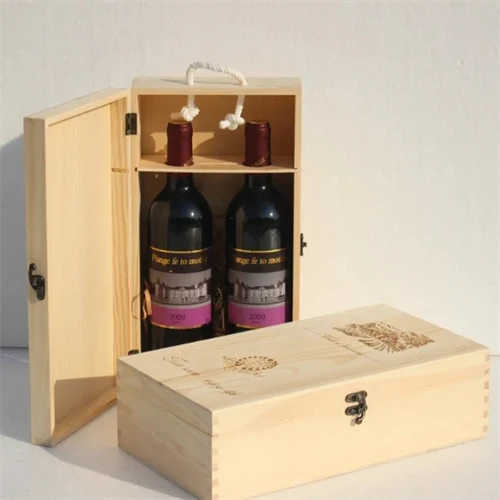
Before we start stacking, it's crucial to understand the characteristics of red wine wooden boxes. Different types of wooden boxes have different strengths and weaknesses. For example, the Scotch Pine Wine Box is made of scotch pine, which is relatively lightweight but still provides good protection. On the other hand, the Wooden Wine Box for 6 Bottles is designed to hold more bottles, so it needs to be more sturdy.
The material of the wooden box affects its load - bearing capacity. Hardwoods generally have a higher load - bearing capacity than softwoods. However, softwoods like pine are often used because they are more cost - effective and can still meet the basic requirements for wine storage. The design of the box also matters. Some boxes have reinforced corners or internal supports, which can enhance their stability during stacking.
Pre - stacking Preparation
- Inspect the Boxes
- Before stacking, carefully inspect each red wine wooden box. Look for any signs of damage, such as cracks, broken corners, or loose joints. Damaged boxes should not be stacked as they may collapse under the weight, endangering the entire stack.
- Check the alignment of the box. A box that is not properly assembled may not stack evenly, leading to an unstable stack.
- Clean the Boxes
- Remove any dust, debris, or moisture from the boxes. Moisture can weaken the wood over time and may also cause mold growth, which can damage the wine bottles inside. Use a dry cloth to wipe the boxes clean.
- Sort the Boxes
- Sort the boxes by size, weight, and type. Stacking boxes of the same size and weight together will make the stack more stable. For example, group the Wooden Wine Boxes according to the number of bottles they can hold or the material they are made of.
Stacking Techniques
- Base Layer
- The base layer is the foundation of the stack. Place the boxes on a flat, stable surface. If the surface is uneven, use shims or leveling pads to make it flat.
- Arrange the boxes in a tight, interlocking pattern. For rectangular boxes, place them side by side with the long sides touching. This will distribute the weight evenly across the base layer.
- Vertical Stacking
- When stacking vertically, make sure each box is centered on the box below it. This will ensure that the weight is evenly distributed and prevent the stack from leaning.
- For taller stacks, consider using corner supports or straps to hold the stack together. These can provide additional stability and prevent the stack from toppling over.
- Height Limitations
- Do not stack the boxes too high. The maximum height of the stack depends on the strength of the boxes and the surface they are stacked on. As a general rule, for most standard red wine wooden boxes, a stack should not exceed 6 - 8 boxes in height. If you need to stack higher, use a pallet racking system.
- Intermediate Layers
- Between each layer, you can use spacers or boards to distribute the weight more evenly. This is especially important for heavier boxes or when stacking on a soft surface.
Environmental Considerations
- Temperature and Humidity
- Red wine is sensitive to temperature and humidity changes. When stacking the wooden boxes, make sure the storage environment has a stable temperature and humidity. A temperature range of 12 - 18°C and a relative humidity of 60 - 70% is ideal for wine storage.
- High humidity can cause the wood to swell and may lead to mold growth, while low humidity can cause the wood to dry out and crack.
- Ventilation
- Good ventilation is essential to prevent the build - up of odors and moisture. Ensure that there is enough space between the stacks for air to circulate. Avoid stacking the boxes in a closed, stuffy area.
Safety Precautions
- Personal Safety
- When stacking the boxes, use proper lifting techniques. Bend your knees and lift with your legs, not your back. If the boxes are too heavy, use a forklift or other mechanical equipment.
- Wear appropriate safety gear, such as gloves and safety shoes, to protect yourself from splinters and potential falls.
- Fire Safety
- Wood is a flammable material. Keep the storage area away from open flames and sources of heat. Install fire extinguishers in the storage area and ensure that they are in good working condition.
Monitoring and Maintenance
- Regular Inspections
- Regularly inspect the stacks to check for any signs of instability or damage. Look for leaning stacks, cracks in the boxes, or any other issues that may pose a safety risk.
- If you notice any problems, take immediate action to correct them. This may involve re - stacking the boxes or replacing damaged ones.
- Re - stacking
- Over time, the weight of the boxes may cause the stack to settle or become unstable. Periodically re - stack the boxes to ensure their stability. This is especially important if the storage conditions change or if the boxes have been stored for a long time.
In conclusion, safely stacking red wine wooden boxes requires careful planning, proper techniques, and attention to environmental factors. By following these guidelines, you can ensure the safety of the wine bottles and the efficiency of your storage and transportation operations.
If you are interested in our high - quality Wooden Wine Boxes, please feel free to contact us for more information and to discuss your procurement needs. We are committed to providing the best products and services to our customers.

References:
- Wood Product Handbook: A Guide to the Properties and Uses of Wood
- Wine Storage and Cellaring Best Practices