

What is the bending strength of a poplar wood handle?
Jul 29, 2025
Leave a message
As a supplier of Poplar Wood Handles, I often receive inquiries about the bending strength of poplar wood. Understanding the bending strength of poplar wood is crucial for various applications, especially when it comes to handles, where durability and reliability are key factors. In this blog post, I will delve into the concept of bending strength, explore the factors that influence it in poplar wood, and discuss its implications for our Poplar Wood Handles.
Understanding Bending Strength
Bending strength, also known as flexural strength, is a measure of a material's ability to resist deformation under a bending load. When a force is applied to a beam or a structure in a way that causes it to bend, the material experiences both tensile and compressive stresses. The bending strength is determined by the maximum stress that the material can withstand before it fails or breaks.
In the case of poplar wood, bending strength is an important property because handles are often subjected to bending forces during normal use. For example, when you pull or push a door using a handle, the handle experiences a bending load. If the bending strength of the poplar wood is insufficient, the handle may crack, break, or deform over time, compromising its functionality and safety.
Factors Affecting the Bending Strength of Poplar Wood
Several factors can influence the bending strength of poplar wood. Understanding these factors can help us optimize the manufacturing process and ensure that our Poplar Wood Handles meet the highest standards of quality and performance.
1. Wood Species and Quality
Poplar is a common hardwood species that is known for its relatively low density and moderate strength. However, the bending strength of poplar wood can vary depending on the specific species and the quality of the wood. For example, yellow poplar (Liriodendron tulipifera) is generally stronger than white poplar (Populus alba). Additionally, wood that is free from defects such as knots, cracks, and decay will have higher bending strength compared to wood with defects.
2. Moisture Content
Moisture content is another important factor that affects the bending strength of poplar wood. Wood is a hygroscopic material, which means it can absorb and release moisture from the surrounding environment. When the moisture content of the wood is too high, the wood becomes softer and more flexible, reducing its bending strength. On the other hand, when the moisture content is too low, the wood becomes brittle and more prone to cracking. Therefore, it is important to control the moisture content of the poplar wood during the manufacturing process to ensure optimal bending strength.
3. Grain Orientation
The grain orientation of the wood also plays a significant role in determining its bending strength. Wood has a natural grain structure, which consists of long, parallel fibers. When the bending load is applied parallel to the grain, the wood can withstand higher stresses compared to when the load is applied perpendicular to the grain. Therefore, it is important to orient the grain of the poplar wood in the handle in a way that maximizes its bending strength.
4. Treatment and Finishing
Treatment and finishing processes can also affect the bending strength of poplar wood. For example, applying a protective finish such as paint, varnish, or oil can help to seal the wood and prevent moisture from entering, which can improve its durability and bending strength. Additionally, treating the wood with preservatives or fire retardants can enhance its resistance to decay and fire, further increasing its overall strength and performance.
Measuring the Bending Strength of Poplar Wood
To determine the bending strength of poplar wood, various testing methods can be used. One common method is the three-point bending test, which involves placing a sample of the wood on two supports and applying a load at the center of the sample until it fails. The maximum load that the sample can withstand before failure is recorded, and the bending strength is calculated based on the dimensions of the sample and the applied load.
Another method is the four-point bending test, which is similar to the three-point bending test but involves applying the load at two points instead of one. This method is often used for testing larger samples of wood or for simulating real-world loading conditions more accurately.
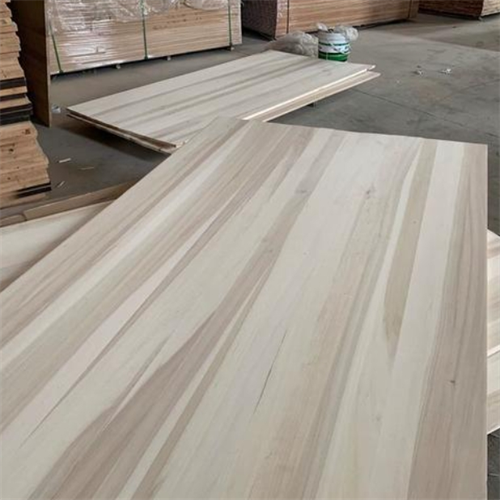

In addition to these laboratory tests, field tests can also be conducted to evaluate the bending strength of poplar wood in actual applications. For example, handles can be installed on doors or cabinets and subjected to repeated use to observe their performance over time.
Implications for Poplar Wood Handles
The bending strength of poplar wood has important implications for the design, manufacturing, and performance of Poplar Wood Handles. By understanding the factors that affect the bending strength and using appropriate testing methods, we can ensure that our handles are strong, durable, and reliable.
In terms of design, the shape and size of the handle can be optimized to maximize its bending strength. For example, a handle with a thicker cross-section or a more ergonomic design may be able to withstand higher bending loads compared to a thinner or less well-designed handle.
During the manufacturing process, we can take steps to control the factors that affect the bending strength, such as selecting high-quality poplar wood, controlling the moisture content, and orienting the grain correctly. Additionally, we can apply appropriate treatments and finishes to enhance the durability and performance of the handles.
Finally, by testing the bending strength of our Poplar Wood Handles using reliable methods, we can provide our customers with accurate information about the strength and performance of our products. This can help them make informed decisions when choosing handles for their applications and ensure that they are getting the best value for their money.
Conclusion
In conclusion, the bending strength of poplar wood is an important property that affects the performance and durability of Poplar Wood Handles. By understanding the factors that influence the bending strength, using appropriate testing methods, and taking steps to optimize the manufacturing process, we can ensure that our handles meet the highest standards of quality and performance.
If you are in the market for high-quality Poplar Wood Handles, we invite you to contact us to discuss your specific requirements. Our team of experts is dedicated to providing you with the best products and services, and we look forward to working with you to meet your needs.
References
- Forest Products Laboratory. (2010). Wood Handbook: Wood as an Engineering Material. Madison, WI: U.S. Department of Agriculture, Forest Service.
- ASTM International. (2019). Standard Test Methods for Static Tests of Lumber in Structural Sizes. West Conshohocken, PA: ASTM International.
- Rowell, R. M. (Ed.). (2005). Handbook of Wood Chemistry and Wood Composites. Boca Raton, FL: CRC Press.