

What is the moisture content of LVB Poplar Slats?
Nov 20, 2025
Leave a message
As a supplier of LVB Poplar Slats, one of the most frequently asked questions I encounter is about the moisture content of these slats. Understanding the moisture content is crucial as it significantly impacts the quality, durability, and performance of the LVB Poplar Slats in various applications. In this blog, I will delve into the details of what the moisture content of LVB Poplar Slats is, why it matters, and how we manage it to ensure the best products for our customers.
What is Moisture Content?
Moisture content refers to the amount of water present in a material, expressed as a percentage of the material's dry weight. For LVB Poplar Slats, the moisture content plays a vital role in determining their physical and mechanical properties. Wood is a hygroscopic material, which means it can absorb and release moisture from the surrounding environment. This absorption and desorption process can cause the wood to expand or contract, leading to issues such as warping, cracking, and joint failure if not properly managed.
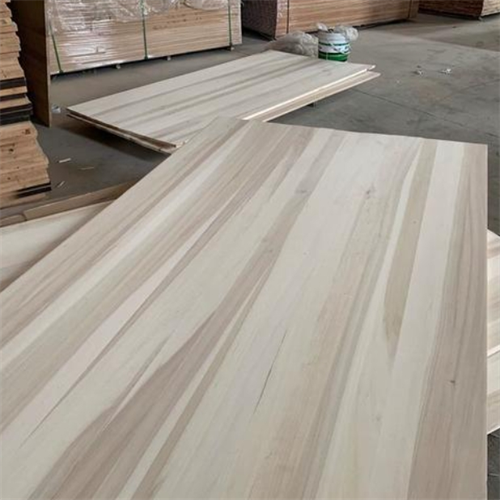

Ideal Moisture Content for LVB Poplar Slats
The ideal moisture content for LVB Poplar Slats depends on their intended use. In general, for indoor applications such as furniture making, cabinetry, and Poplar Drawer Board, a moisture content of around 6% - 12% is recommended. This range ensures that the slats are stable and less likely to experience dimensional changes due to normal fluctuations in indoor humidity.
For outdoor applications or environments with higher humidity levels, a slightly higher moisture content of 12% - 18% may be acceptable. However, it's important to note that even in these cases, proper treatment and protection are necessary to prevent the wood from absorbing excessive moisture and deteriorating over time.
Measuring Moisture Content
There are several methods available for measuring the moisture content of LVB Poplar Slats. The most common methods include:
- Oven-Dry Method: This is the most accurate method but also the most time-consuming. It involves weighing a sample of the slat, drying it in an oven at a specific temperature until all the moisture is removed, and then weighing it again. The difference in weight is used to calculate the moisture content.
- Moisture Meters: These are handheld devices that use electrical resistance or capacitance to measure the moisture content of the wood. They are quick and easy to use, providing instant results. However, their accuracy can be affected by factors such as wood species, temperature, and the presence of contaminants.
Managing Moisture Content in LVB Poplar Slats
As a supplier, we take several steps to manage the moisture content of our LVB Poplar Slats and ensure that they meet the required standards.
- Drying Process: We use advanced drying techniques to reduce the moisture content of the slats to the desired level. This typically involves kiln drying, which allows us to control the temperature, humidity, and airflow to achieve a uniform and consistent moisture content throughout the slats.
- Storage Conditions: After drying, the slats are stored in a controlled environment to prevent them from absorbing or losing moisture. Our storage facilities are equipped with humidity control systems to maintain a stable environment and protect the quality of the slats.
- Quality Control: We conduct regular quality checks to monitor the moisture content of the slats. Samples are taken from each batch and tested using both oven-dry methods and moisture meters to ensure that they meet our strict quality standards.
Importance of Proper Moisture Content
Maintaining the proper moisture content in LVB Poplar Slats is essential for several reasons:
- Dimensional Stability: Wood that is too wet or too dry can expand or contract, leading to warping, twisting, and cracking. By ensuring that the slats have the right moisture content, we can minimize these issues and ensure that they maintain their shape and size over time.
- Strength and Durability: The moisture content of wood can also affect its strength and durability. Wood that is too wet is more susceptible to decay and insect damage, while wood that is too dry may be brittle and prone to splitting. By maintaining the proper moisture content, we can enhance the strength and durability of the slats and extend their lifespan.
- Finish Quality: The moisture content of the wood can also impact the quality of the finish applied to the slats. If the wood is too wet, the finish may not adhere properly, resulting in a poor-quality finish that is prone to peeling and flaking. By ensuring that the slats have the right moisture content, we can achieve a smooth and durable finish that enhances the appearance of the final product.
Applications of LVB Poplar Slats with Proper Moisture Content
LVB Poplar Slats with the proper moisture content are suitable for a wide range of applications, including:
- Furniture Making: They are commonly used in the construction of chairs, tables, beds, and other furniture pieces. Their stability and uniform moisture content make them ideal for creating high-quality and long-lasting furniture.
- Cabinetry: LVB Poplar Slats are also popular for cabinetry, including kitchen cabinets, bathroom vanities, and storage units. Their smooth surface and consistent moisture content allow for easy installation and a professional finish.
- Poplar Edge Glued Board and LVL Poplar Wood Board: These products are made by gluing together multiple layers of LVB Poplar Slats. The proper moisture content ensures a strong and stable bond between the layers, resulting in a high-quality and reliable board.
Conclusion
In conclusion, the moisture content of LVB Poplar Slats is a critical factor that affects their quality, durability, and performance. As a supplier, we are committed to providing our customers with high-quality slats that have the proper moisture content for their specific applications. By using advanced drying techniques, strict quality control measures, and proper storage conditions, we ensure that our slats meet the highest standards and exceed our customers' expectations.
If you are interested in purchasing LVB Poplar Slats or have any questions about their moisture content or other properties, please feel free to contact us. We would be happy to discuss your requirements and provide you with the best solutions for your project.
References
- Wood Handbook: Wood as an Engineering Material. Forest Products Laboratory.
- ASTM D4442 - Standard Test Methods for Direct Moisture Content Measurement of Wood and Wood - Based Materials.