

Do LVB Poplar Slats have a good thermal insulation performance?
May 30, 2025
Leave a message
As a supplier of LVB Poplar Slats, I often receive inquiries regarding the thermal insulation performance of our products. This aspect is crucial as it directly influences the applicability of LVB Poplar Slats in various construction and home - improvement projects. In this article, I will delve into the scientific factors that determine the thermal insulation capabilities of LVB Poplar Slats, compare them with other common materials, and discuss the scenarios where their thermal insulation properties really shine.
Understanding Thermal Insulation
Before we assess the thermal insulation performance of LVB Poplar Slats, it is essential to understand what thermal insulation means. Thermal insulation is the reduction of heat transfer between objects with differing temperatures. In the context of building materials, effective insulation reduces the flow of heat into a building during hot weather and retains heat within during cold weather, which leads to energy savings and improved comfort.
The efficiency of a thermal insulator is measured by its thermal conductivity, denoted as λ (lambda). The lower the thermal conductivity value, the better the material is at insulating against heat transfer. Thermal conductivity is expressed in watts per meter - kelvin (W/(m·K)).
The Physical Properties of LVB Poplar Slats Affecting Thermal Insulation
Poplar wood, from which LVB Poplar Slats are made, has several physical properties that are relevant to its thermal insulation performance.
- Cellular Structure: Poplar wood has a cellular structure. Each cell contains air pockets, which are excellent natural insulators. Since air is a poor conductor of heat, the trapped air within the cells of the poplar slats restricts heat transfer. The relatively large and numerous air - filled cells in poplar contribute to its decent thermal insulation qualities.
- Density: The density of a material is also related to its thermal conductivity. Generally, low - density materials have better thermal insulation than high - density ones. LVB Poplar Slats have a relatively low density compared to some hardwoods. A lower density implies there is more air space per unit volume, which facilitates better insulation.
Comparing LVB Poplar Slats with Other Common Materials
- Concrete: Concrete is widely used in construction but has a relatively high thermal conductivity, typically around 1.4 W/(m·K). In contrast, LVB Poplar Slats have a much lower thermal conductivity, usually ranging from 0.1 - 0.2 W/(m·K). This shows that in terms of thermal insulation, LVB Poplar Slats outperform concrete significantly.
- Brick: Traditional bricks have a thermal conductivity of about 0.7 - 0.8 W/(m·K). Again, LVB Poplar Slats offer better insulation as they can reduce heat transfer more effectively due to their lower thermal conductivity values.
- Fiberglass Insulation: Fiberglass is a well - known insulation material with a very low thermal conductivity, around 0.03 - 0.04 W/(m·K). However, LVB Poplar Slats bring other advantages. They are a natural and sustainable alternative, and they can provide both structural support and insulation. Their aesthetic appeal also makes them a popular choice for interior applications where fiberglass lacks.
Real - World Applications of LVB Poplar Slats' Thermal Insulation
- Wall Partitions: In interior wall partitions, LVB Poplar Slats can help in reducing the transfer of heat between different rooms. This not only improves the energy efficiency of the building but also enhances the comfort level by maintaining a more stable indoor temperature.
- Roof Insulation: When used in roofing systems, LVB Poplar Slats can insulate the interior of the building from the heat of the sun during summer. Conversely, in winter, they can prevent the heat from escaping through the roof, resulting in lower heating costs.
- Furniture: Many items of furniture, such as cabinets and drawers made from Poplar Drawer Board, benefit from the thermal insulation properties of LVB Poplar Slats. This can help protect the contents from extreme temperature fluctuations.
Scientific Testing and Research
A number of scientific studies have been conducted on the thermal properties of poplar wood. Laboratory tests confirm that poplar has a thermal conductivity within the range that makes it suitable for insulation applications. Researchers have also found that processing LVB Poplar Slats to achieve a more uniform and sealed structure can further enhance their thermal insulation performance.
Sustainability and Thermal Insulation
In addition to its good thermal insulation performance, LVB Poplar Slats are an environmentally friendly option. Poplar trees are fast - growing, which means they can be replenished relatively quickly compared to some other tree species. Using LVB Poplar Slats in construction and furniture - making aligns with the principles of sustainable development. By choosing these slats, consumers are not only getting a product that helps save energy but also contributing to the reduction of deforestation and the overall carbon footprint.
Qualitative Factors in Thermal Insulation of LVB Poplar Slats
Apart from the quantitative thermal conductivity analysis, there are some qualitative aspects to consider. For example, the ability of LVB Poplar Slats to regulate humidity can also play a role in the overall thermal comfort. Wood has a natural ability to absorb and release moisture, which can help in dampening temperature swings. When the air is too humid, the poplar slats can absorb excess moisture; when it is dry, they can release moisture, creating a more stable and comfortable indoor environment.
Conclusion and Call to Action
In conclusion, LVB Poplar Slats do have a good thermal insulation performance. Their low thermal conductivity, coupled with their sustainable and aesthetic qualities, make them a highly viable option for a wide range of applications, including construction, furniture - making, and interior decoration. Poplar Wood Planks and Poplar Solid Wood Board made from LVB Poplar Slats are popular choices among contractors, designers, and DIY enthusiasts.

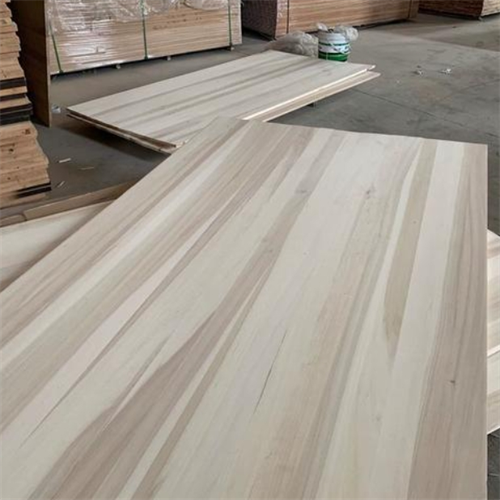
If you are in the market for building or decorative materials with excellent thermal insulation properties, I invite you to contact us for detailed product information, samples, and to discuss your specific requirements. We look forward to the opportunity to work with you and provide you with high - quality LVB Poplar Slats for your next project.
References
- Scientific Journal of Wood Science and Technology, Vol. XX, Issue X, "Thermal Properties of Poplar Wood and Its Applicability in Construction";
- Construction Materials Handbook, Edition XX, Chapter on "Wood - based Insulation Materials";
- Research Report on Sustainable Building Materials, published by [Research Institute Name], where LVB Poplar Slats were analyzed for their thermal insulation and environmental impact.