

Do solid wood boards require special storage conditions?
Oct 01, 2025
Leave a message
As a solid wood board supplier, I often get asked whether solid wood boards require special storage conditions. Well, the short answer is yes, they do. But let's dig deeper into why that is and what those special conditions entail.
Solid wood is a natural material, and like all natural materials, it's affected by its environment. One of the biggest factors that can impact solid wood boards is humidity. Wood is hygroscopic, which means it can absorb and release moisture from the surrounding air. When the humidity is high, the wood will absorb moisture and expand. Conversely, when the humidity is low, the wood will release moisture and shrink. These changes in size can lead to warping, cracking, and other forms of damage.

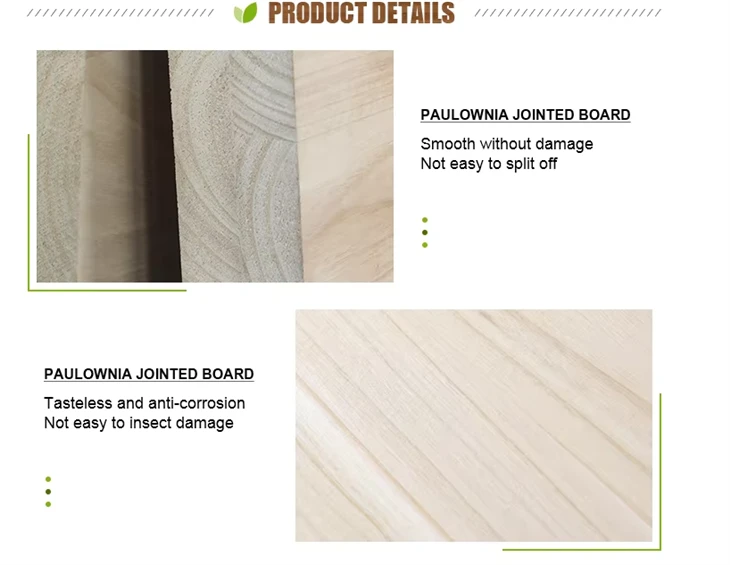
For example, if you store solid wood boards in a basement where the humidity is constantly high, the boards may start to warp over time. On the other hand, if you store them in a very dry environment, like an attic with poor insulation during the winter, the boards could crack. So, it's crucial to store solid wood boards in an environment with stable humidity levels. Ideally, the relative humidity should be kept between 30% and 50%.
Temperature is another important factor. Extreme temperatures can also cause problems for solid wood boards. High temperatures can accelerate the drying process, which may lead to cracking. Low temperatures, especially if they're accompanied by high humidity, can promote the growth of mold and mildew. A stable temperature between 60°F and 80°F is generally recommended for storing solid wood boards.
Light exposure is often overlooked but can also have an impact on solid wood. Direct sunlight can cause the wood to fade and dry out unevenly. Over time, this can lead to discoloration and a loss of the wood's natural luster. So, it's best to store solid wood boards in a place where they're not exposed to direct sunlight for extended periods.
Now, let's talk about the physical storage of the boards. It's important to store them in a way that allows for proper air circulation. Stacking the boards too tightly can trap moisture and prevent it from evaporating, which can lead to mold growth. You can use spacers between the boards to create gaps for air to flow. Also, make sure the storage area is clean and free of debris that could scratch or damage the boards.
If you're storing large quantities of solid wood boards, a rack system can be a great option. Racks keep the boards off the ground, which helps prevent moisture from seeping in from the floor. They also make it easier to access the boards and ensure that air can circulate around them.
As a supplier, I offer a variety of solid wood boards, including Paulownia Bead Board, Wooden Breaking Board, and Paulownia Finger Joint Wood Panel. Each of these boards has its own unique characteristics, but they all benefit from proper storage conditions.
Paulownia wood, for instance, is known for its lightweight and fast - growing properties. It's also relatively stable compared to some other types of wood, but it still needs to be stored correctly to maintain its quality. The bead board is often used for decorative purposes, and any damage due to improper storage could affect its appearance.
The wooden breaking board is designed for more heavy - duty applications. However, if it's not stored properly, it could become weakened over time, reducing its effectiveness.
The Paulownia finger joint wood panel is a great option for construction and furniture making. Proper storage ensures that the joints remain strong and the panel stays flat and stable.
In conclusion, solid wood boards do require special storage conditions. By controlling humidity, temperature, and light exposure, and by ensuring proper air circulation and physical storage, you can keep your solid wood boards in top condition for longer.
If you're in the market for high - quality solid wood boards, I'd love to talk to you. Whether you're a contractor, a furniture maker, or a DIY enthusiast, I can provide you with the right boards for your project. Don't hesitate to reach out for more information or to discuss your specific needs. Let's work together to make your project a success!
References
- Wood Handbook: Wood as an Engineering Material. Forest Products Laboratory.
- Understanding Wood: A Craftsman's Guide to Wood Technology. R. Bruce Hoadley.