

What is the elasticity of Poplar Drawer Board?
Dec 02, 2025
Leave a message
As a supplier of Poplar Drawer Board, I've often been asked about its various properties, with elasticity being a frequently inquired topic. In this blog, I'll delve into what the elasticity of Poplar Drawer Board is, why it matters, and how it impacts its use in different applications.
Understanding Elasticity
Elasticity, in the context of materials like Poplar Drawer Board, refers to the ability of the material to deform under stress and then return to its original shape once the stress is removed. This property is crucial as it determines how well the board can withstand bending, stretching, or compression without permanent damage.
The elasticity of a material is typically measured by its modulus of elasticity (MOE). The MOE is a measure of the stiffness of a material and is defined as the ratio of stress to strain within the elastic limit of the material. In simpler terms, it tells us how much a material will stretch or compress under a given load. A higher MOE indicates a stiffer material that is less likely to deform under stress.
Factors Affecting the Elasticity of Poplar Drawer Board
Several factors can influence the elasticity of Poplar Drawer Board. One of the most significant factors is the species of poplar used. Different poplar species have varying densities and cell structures, which can affect their elasticity. For example, some poplar species may have a more open cell structure, making them more flexible and less stiff than others.
The moisture content of the board also plays a crucial role in its elasticity. Wood is a hygroscopic material, meaning it can absorb and release moisture depending on the surrounding environment. When the moisture content of the board changes, its dimensions and mechanical properties can also change. A board with a higher moisture content is generally more flexible but may also be more prone to warping and other forms of deformation.
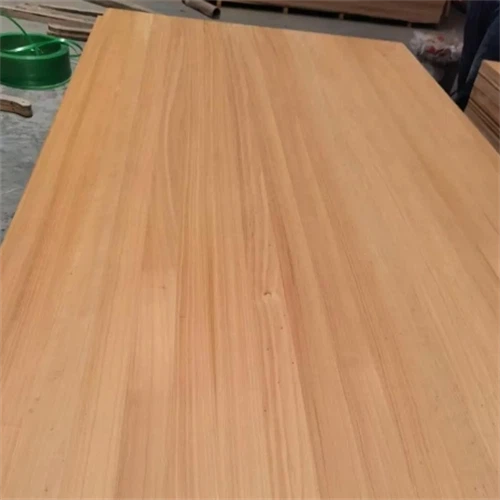

The grain orientation of the wood is another important factor. Wood has different mechanical properties along and across the grain. The elasticity of the board is typically higher along the grain than across it. This means that a Poplar Drawer Board with the grain running parallel to the direction of the applied stress will be more resistant to deformation than one with the grain running perpendicular to the stress.
Importance of Elasticity in Poplar Drawer Board
The elasticity of Poplar Drawer Board is important for several reasons. Firstly, it affects the durability of the board. A board with good elasticity can withstand repeated use and stress without cracking or breaking. This is particularly important in drawer applications, where the board is subjected to constant opening and closing, as well as the weight of the items stored in the drawer.
Secondly, elasticity can impact the aesthetic appeal of the board. A board that is too stiff may be more likely to develop cracks or splits over time, which can detract from its appearance. On the other hand, a board with the right amount of elasticity can maintain its smooth surface and shape, enhancing the overall look of the drawer.
Finally, the elasticity of the board can also affect its ease of installation. A more flexible board can be bent or shaped to fit different drawer designs and dimensions, making it easier to work with. This can save time and labor during the installation process.
Applications of Poplar Drawer Board Based on Its Elasticity
The unique elasticity of Poplar Drawer Board makes it suitable for a variety of applications. In addition to traditional drawer construction, it can also be used in other furniture pieces where flexibility and durability are required.
For example, Poplar Wood Table Top can benefit from the elasticity of poplar. A table top made from Poplar Drawer Board can withstand the weight of objects placed on it without cracking or warping. The elasticity of the board allows it to flex slightly under the load, distributing the stress evenly across the surface.
Another application is in the construction of cabinets and shelves. The flexibility of the Poplar Drawer Board makes it easy to install in different cabinet designs, and its durability ensures that it can support the weight of the stored items over time.
Comparing Poplar Drawer Board with Other Materials
When considering the use of Poplar Drawer Board, it's important to compare its elasticity with that of other materials commonly used in drawer construction. For example, compared to hardwoods like oak or maple, poplar generally has a lower modulus of elasticity, which means it is more flexible. This can be an advantage in some applications where a more forgiving material is needed.
However, compared to softwoods like pine, poplar may have a higher MOE, making it stiffer and more resistant to deformation. This can make it a better choice for applications where durability and stability are important.
Testing the Elasticity of Poplar Drawer Board
To ensure the quality and performance of Poplar Drawer Board, it's important to test its elasticity. There are several methods for testing the elasticity of wood, including the three-point bending test and the modulus of rupture test.
In the three-point bending test, a sample of the board is supported at two points and loaded at the center. The amount of deflection under the load is measured, and the modulus of elasticity is calculated based on the applied load and the dimensions of the sample.
The modulus of rupture test measures the maximum stress that the board can withstand before breaking. This test provides information about the strength and durability of the board, which is closely related to its elasticity.
Maintaining the Elasticity of Poplar Drawer Board
To maintain the elasticity of Poplar Drawer Board, it's important to store and handle it properly. The board should be stored in a dry, well-ventilated area to prevent moisture absorption. It's also important to avoid exposing the board to extreme temperatures and humidity, as these can cause the wood to expand or contract, leading to changes in its elasticity.
During installation, it's important to use the correct fasteners and techniques to ensure that the board is properly supported and not overstressed. This can help to prevent damage to the board and maintain its elasticity over time.
Conclusion
In conclusion, the elasticity of Poplar Drawer Board is an important property that affects its durability, aesthetic appeal, and ease of installation. Understanding the factors that influence the elasticity of the board and how to maintain it can help you make the most of this versatile material.
If you're interested in using Poplar Drawer Board for your next project, I encourage you to explore our range of Poplar Drawer Board products. We also offer Carbonized Poplar Board, which has unique properties and can be used in a variety of applications. If you have any questions or would like to discuss your specific requirements, please feel free to contact us for a procurement discussion.
References
- ASTM D143 - Standard Test Methods for Small Clear Specimens of Timber
- Forest Products Laboratory. (2010). Wood Handbook: Wood as an Engineering Material. U.S. Department of Agriculture, Forest Service.